In 2015, when I first attended the Conference of States Parties (COSP) to the Convention on the Rights of Persons with Disabilities (CRPD), I observed that there were only a few persons with albinism in the conference room. This year, more than eleven of us from various countries participated. More importantly, we were not merely participating in the conference; we were actively hosting, contributing to discussions, and, in certain instances, representing our governments.
For me, the experience was one of the biggest takeaways from COSP 19.
It was equally encouraging to hear African governments refer to persons with albinism during their national statements. Together, these developments reflected growing recognition of persons with albinism within global disability discussions and demonstrated how far our movement has come over the past decade.
As COSP marked twenty years since the adoption of the CRPD, it also provided an opportunity to reflect on the work that still lies ahead.
Bringing African experiences into global discussions
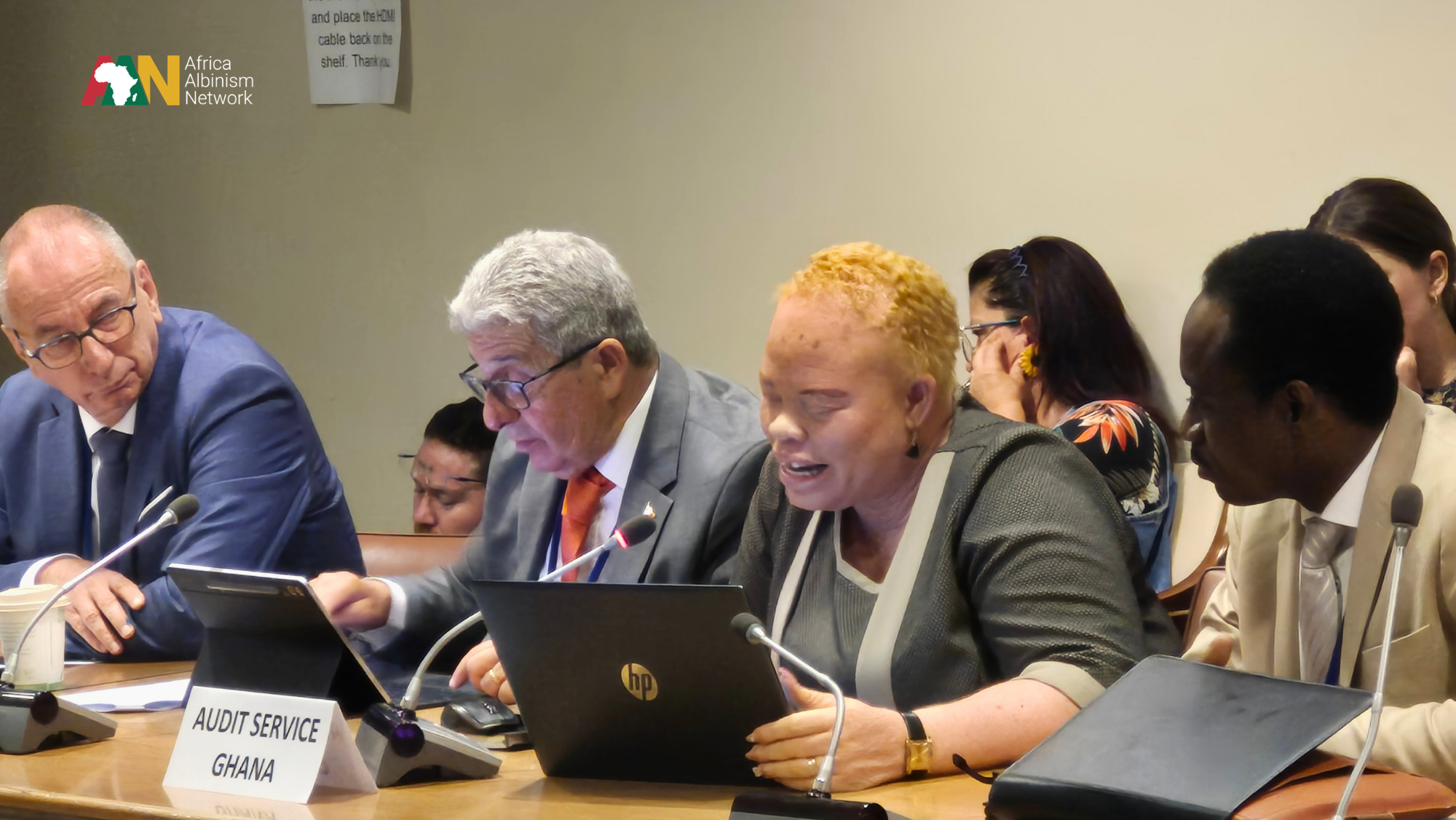
Mawunyo Yakor-Dagbah representing Ghana speaking at COSP side event for the World Health Organization Disability Health Equity Network
One of AAN’s key objectives in participating at COSP was to ensure that the experiences of persons with albinism across Africa were represented within global discussions on disability rights. As a pan-African organisation, we have a responsibility to share both the progress being made and the challenges that continue to affect our community.
At the Civil Society Forum, AAN delivered a statement that highlighted ongoing human rights violations against persons with albinism across Africa. I spoke about the murder of a 36-year-old man with albinism in Malawi, the disappearance of an 18-month-old child, and the brutal killing of a 14-year-old child with albinism in Madagascar.
Across 31 African countries, our network has documented more than 849 human rights violations against persons with albinism, including physical attacks, ritual killings and grave desecration.
As I said during the statement:
“These are not just numbers. They show a deep-rooted stigma, discrimination, and violence that is happening in our communities, in our policies, in our homes, and also in our society.”
The statement also emphasised the importance of National Action Plans, improved reporting of human rights violations, and greater accountability within the implementation of the CRPD.
AAN Executive Director Bonface Massah speaking at the Civil Society Forum during COSP 19
Reflecting on twenty years of the CRPD
Many discussions looked beyond celebrating progress and instead concentrated on the implementation gaps that continue to affect persons with disabilities around the world.
The Committee on the Rights of Persons with Disabilities should give more systematic attention to the situation of persons with albinism in its review of States parties. This includes raising targeted questions in lists of issues, requesting disaggregated information in State reports, and including specific recommendations in concluding observations. The Committee should also follow up on whether States are implementing these recommendations and responding effectively to reported attacks, discrimination and barriers to health, education, and employment. Consistent scrutiny would help ensure that broader disability reporting does not overlook persons with albinism.
Data must become more inclusive
One discussion that continued to emerge throughout the week focused on disability data.
Many countries are beginning to use the Washington Group Questions to strengthen disability data collection, which is encouraging. However, it also became clear that considerable work remains to ensure that national statistics appropriately capture persons with albinism.
For AAN, this issue is particularly important because persons with albinism represent a relatively small population whose needs can easily become overlooked if reliable data does not exist.
Better data supports better planning. It enables governments to better understand the needs of their populations, strengthens advocacy efforts, and provides a stronger evidence base for developing programmes, allocating resources, and measuring progress.
Looking ahead, promoting the use of the Washington Group Questions and improving disability data should remain a priority. Without accurate data, it becomes much more difficult to design effective programmes, understand the scale of exclusion, or ensure that persons with albinism are fully included within national planning.
Investing in the next generation of leadership
Another topic that stayed with me was the importance of continuing to fund organisations that support persons with disabilities and invest in the next generation of disability leaders.
Several discussions acknowledged that disability movements around the world have experienced significant challenges over recent years. Reduced funding, changing priorities and leadership transitions have affected the ability of organisations to sustain advocacy and continue representing their communities effectively.
These discussions resonated with AAN’s own work across Africa. Strengthening organisations of persons with albinism remains central to building a sustainable movement, but we must also invest intentionally in young leaders.
If we want the progress we are beginning to see to continue over the next twenty years, we must ensure that the next generation of persons with albinism has opportunities to develop the leadership skills, experience, and confidence needed to continue advancing the rights of our community.
Climate change cannot remain on the margins
During COSP, I was taken aback by how little we discussed disability and climate change.
This stood out because disability advocates have made important progress within climate spaces, including the recognition of the disability caucus at COP30. I had expected to see stronger discussions during COSP on how climate change is affecting persons with disabilities and how our communities can contribute to climate solutions.
For persons with albinism, climate change is not separate from our human rights work. Rising temperatures and increased exposure to ultraviolet radiation increase existing health risks, particularly skin cancer, while many persons with albinism continue to work outdoors with limited access to sunscreen and skin health services.
The discussions at COSP also reinforced another reflection. Organisations of persons with disabilities need to engage more actively in climate discussions. Climate policy and climate interventions should not develop without the voices of persons with disabilities. We need to contribute our perspectives and ensure that disability inclusion is considered from the outset, rather than afterward.
Moving from dialogue to action
One of the strengths of COSP is that it brings together governments, organisations of persons with disabilities, United Nations agencies, and development partners around shared priorities. For AAN, these conversations are important because they create opportunities that continue long after the conference ends.
Throughout the week, AAN engaged with the International Disability Alliance (IDA), the Africa Disability Forum (ADF), the WHO Disability Health Equity Network, CBM Global, Sightsavers, the Ford Foundation, the Validity Foundation, Humanity & Inclusion and the Disability Rights Fund (DRF). Through these partnerships, AAN provides technical support and helps ensure that programmes, funding priorities, and policy discussions reflect both the broader needs of persons with disabilities and the specific protection, health and inclusion needs of persons with albinism.
We also want these collaborations to strengthen the capacity of organisations of persons with albinism across Africa. By connecting national organisations with broader disability networks, technical expertise, and funding opportunities, these partnerships can support stronger advocacy, more inclusive programmes and more sustainable organisations.
We value the growing collaboration with the Africa Disability Forum and governments including Kenya, South Africa, Ghana, Tanzania, Malawi, Zimbabwe, and Zambia, which co-hosted discussions at COSP on advancing ratification of the African Disability Protocol. The Protocol provides an important regional framework for strengthening the rights and protections of persons with disabilities, including those with albinism.
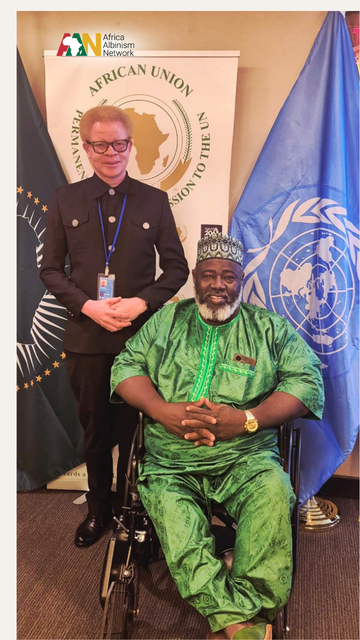
Left to right: Bonface Massah AAN Executive Director and Idriss Maiga, President of the African Disability Forum
Looking ahead
The progress we have achieved was a source of encouragement for me following my attendance at COSP 19. The growing recognition of persons with albinism by governments, the participation of more persons with albinism, and the formation of new partnerships are all indicators that our collective advocacy is having an impact.
At the same time, the conversations throughout the week reinforced that participation must continue to translate into action. For AAN, that means continuing to amplify African voices, supporting organisations of persons with albinism, and working with governments and partners to ensure that the commitments made through the CRPD are reflected in policies, programmes and people’s everyday lives.
That is the work we will continue long after COSP has ended.