When I walked into the meeting room of the Sixth Ordinary Session of the African Union (AU) Specialised Technical Committee on Social Development, Labour and Employment (STC-SDLE) in Windhoek, Namibia, one thought stayed with me throughout the week:
How can we build on the progress already made to strengthen continental leadership on albinism?
Several years have passed since the African Union Executive Council requested the appointment of a Special Envoy on the Rights and Protection of Persons with Albinism through Executive Council Decision EX.CL/Dec.1063(XXXV), without additional financial implications for the African Union.
Since then, important progress has been made. The African Union, Member States, organisations of persons with albinism, civil society organisations, national human rights institutions, and development partners have continued to advance initiatives aimed at strengthening the rights, protection and inclusion of persons with albinism across the continent.
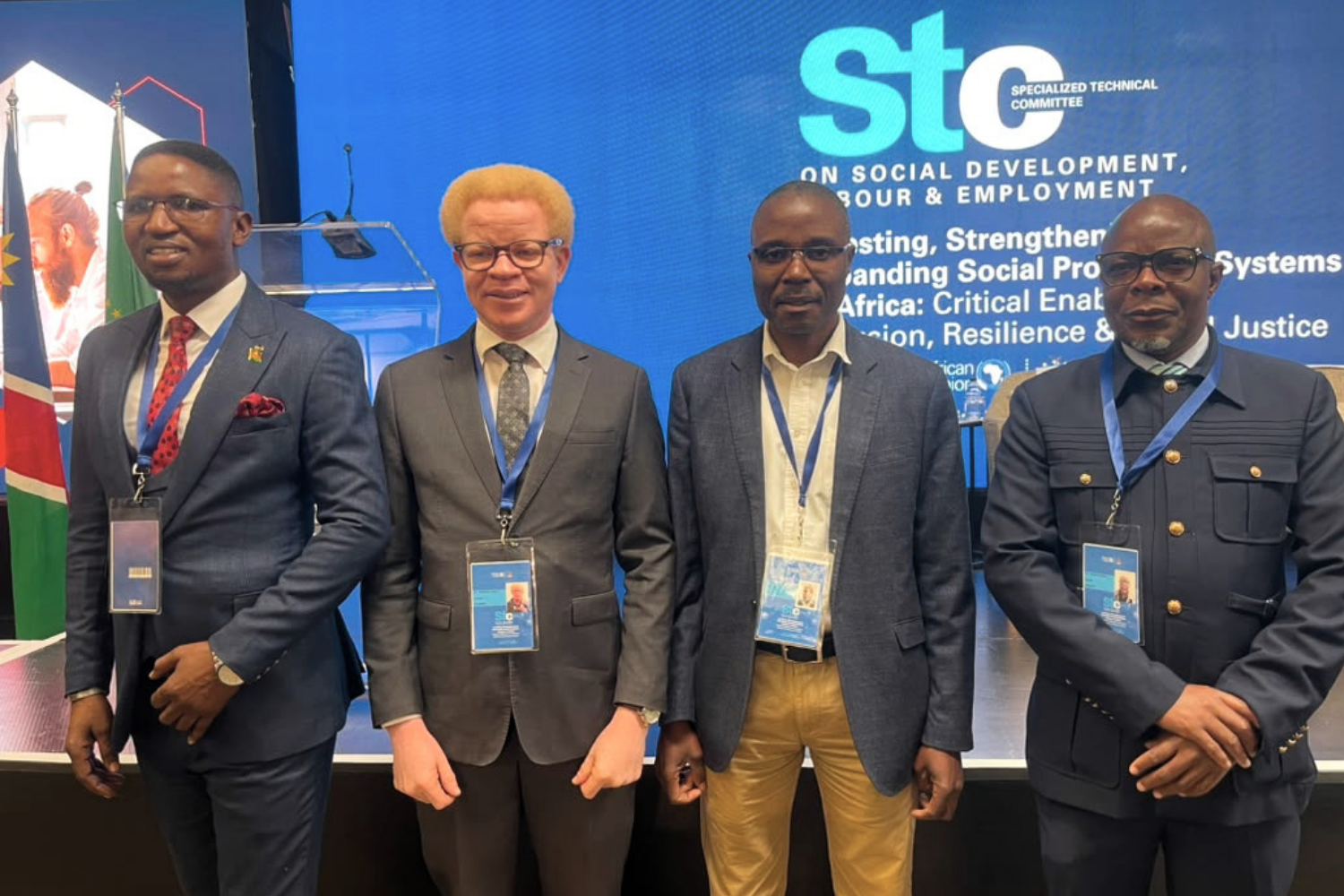
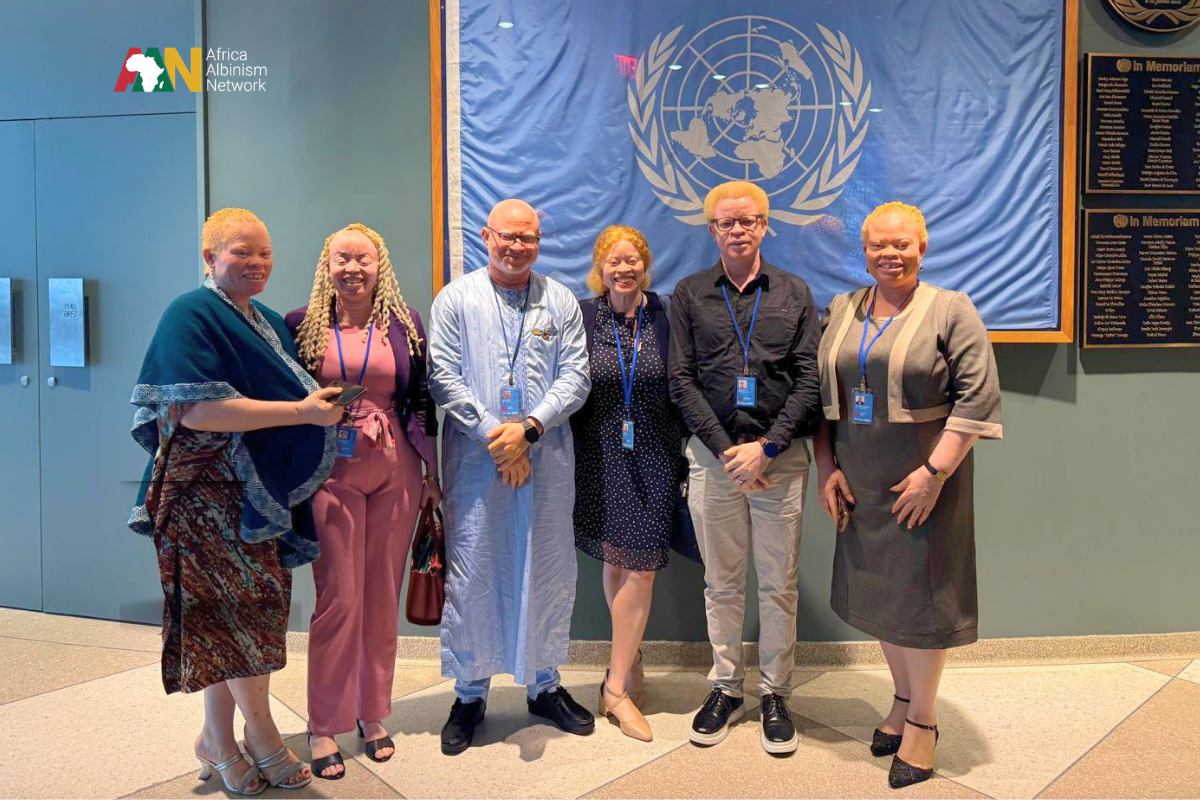
AAN Executive Director Bonface (second from the left) with members of the Malawi delegation during the Sixth Ordinary Session of the AU Specialised Technical Committee on Social Development, Labour and Employment (STC-SDLE) in Windhoek, Namibia.
The continued consideration of the Special Envoy is therefore encouraging. It signals that the commitment remains part of the African Union’s agenda and presents an opportunity to strengthen implementation of existing commitments, particularly the African Union Plan of Action on Ending Attacks and Other Human Rights Violations Targeting Persons with Albinism in Africa (2021-2031).
For the Africa Albinism Network (AAN), this has been an important area of engagement over the years. Through participation in continental forums, dialogue with Member States, engagement with African Union institutions and collaboration with partners, AAN has consistently supported efforts aimed at strengthening continental responses to the human rights challenges affecting persons with albinism.
The appointment of a Special Envoy represents an important opportunity to build on these achievements and strengthen the implementation of commitments that already exist.
Building on Existing African Union Leadership
The African Union has already taken significant steps in advancing the rights and protection of persons with albinism. One of the most important milestones has been the adoption of the African Union Plan of Action on Ending Attacks and Other Human Rights Violations Targeting Persons with Albinism in Africa (2021–2031).
The Plan of Action provides a continental framework for strengthening prevention, protection, accountability, equality and inclusion. It also recognises the importance of coordination among Member States, African Union institutions, Regional Economic Communities, national human rights institutions, civil society organisations and organisations of persons with albinism.
Important institutional developments have also emerged through the work of African human rights mechanisms, including the guiding note on reporting on the rights and welfare of children with albinism in Africa and the landmark judgement before the African Court on Human and Peoples’ Rights.
These developments demonstrate growing continental recognition of the specific challenges faced by persons with albinism and provide a strong foundation for further progress.
However, the challenge before Africa today is not primarily one of policy development. The challenge is ensuring effective and sustained implementation of the commitments that have already been adopted.
Why a Special Envoy Matters
The AU Plan of Action provides a roadmap. What is often needed is sustained continental leadership to help drive implementation, maintain political attention, encourage accountability, and strengthen coordination among stakeholders.
This is where an African Union Special Envoy could make a significant contribution.
The proposed Envoy would not replace the responsibilities of Member States, African Union organs, or existing human rights mechanisms. Rather, the Envoy could serve as a high-level champion dedicated to supporting implementation of the AU Plan of Action and ensuring that the rights of persons with albinism remain visible within broader continental priorities.
Most importantly, the Envoy could help bridge the gap between continental commitments and national-level action.
Supporting Implementation of the AU Plan of Action
A Special Envoy could strengthen implementation of the Plan of Action in several important ways.
Promoting Prevention
Despite progress in many countries, attacks and harmful practices targeting persons with albinism continue to be reported in parts of Africa.
The Envoy could advocate for greater investment in prevention efforts, including public awareness campaigns, community engagement initiatives, traditional and religious leader engagement, and national action plans aimed at combating myths, stigma, and discrimination.
The Envoy could also facilitate the sharing of successful prevention approaches among Member States facing similar challenges.
Strengthening Protection
The AU Plan of Action emphasizes the need for effective protection mechanisms for persons with albinism who are at risk.
A Special Envoy could engage directly with Member States to encourage stronger protection measures, promote regional cooperation, and share lessons learned from countries that have developed promising practices in safeguarding vulnerable individuals and communities.
Advancing Accountability and Access to Justice
The continued prosecution of attacks and other human rights violations remains essential.
A Special Envoy could advocate for stronger investigations, prosecution of perpetrators, and improved access to justice for victims and survivors. The role could also support dialogue with governments on strengthening legal and policy frameworks that protect persons with albinism.
By maintaining high-level engagement on accountability issues, the Envoy could help ensure that violations against persons with albinism remain visible and receive an appropriate response.
Promoting Equality and Inclusion
Persons with albinism continue to face barriers in education, healthcare, employment, social protection, political participation, and community life.
The Envoy could help elevate these issues across continental policy discussions and advocate for the inclusion of albinism in broader disability, health, education, social protection, and human rights frameworks.
This would support implementation of the Plan’s broader vision of equality and inclusion beyond protection from violence alone.
Strengthening Coordination
The Plan of Action recognizes that progress depends on collaboration across many actors.
A Special Envoy could serve as a continental focal point bringing together Member States, Regional Economic Communities, National Human Rights Institutions, organisations of persons with albinism, development partners, and civil society organisations.
Such coordination could strengthen collective action, reduce duplication of effort, and create opportunities for sharing expertise and good practices across the continent.
Supporting Monitoring and Reporting
One of the greatest challenges facing many continental frameworks is maintaining momentum over time.
A Special Envoy could support monitoring of implementation efforts, encourage reporting on progress made by Member States, identify gaps, and promote evidence-based recommendations for strengthening responses.
This would help transform the Plan of Action from a policy framework into a more dynamic implementation mechanism capable of delivering measurable results.
Why Continental Leadership Matters
Across Africa, persons with albinism continue to experience a range of human rights challenges. Attacks and harmful practices remain a concern in some countries. Children with albinism continue to encounter discrimination and barriers within education systems. Access to appropriate healthcare, including sunscreen, dermatological services and early diagnosis of skin cancer, remains limited in many communities.
At the same time, significant progress has been made. Governments, organisations of persons with albinism, national human rights institutions, civil society organisations, development partners and African institutions are increasingly working together to address these challenges.
The opportunity before us is therefore not to begin from the start, but to strengthen what already exists, connect ongoing efforts and deepen implementation of commitments already agreed upon.
A Special Envoy could help transform the AU Plan of Action from a continental framework into a living implementation tool, helping to sustain momentum throughout the remaining years of the 2021-2031 period.
Building on Global Progress
Over the past decade, the mandate of the United Nations Independent Expert on the enjoyment of human rights by persons with albinism has contributed significantly to increasing international attention to the rights of persons with albinism.
The mandate has helped bring greater visibility to issues affecting persons with albinism, strengthened engagement with governments and civil society, and contributed to the development of important human rights standards and advocacy initiatives.
An African Union Special Envoy would complement this important global work by strengthening sustained continental leadership grounded in African realities, institutions and solutions.
Together, global and continental mechanisms could create stronger opportunities for collaboration and mutual reinforcement in advancing the rights of persons with albinism.
Encouraging Engagement in Windhoek
Throughout the five days of the STC-SDLE meeting in Windhoek, AAN engaged with government representatives, African Union officials, Regional Economic Communities and other stakeholders.
These engagements provided valuable opportunities to discuss the situation of persons with albinism, share experiences from different countries and explore opportunities for stronger collaboration.
They also reinforced the importance of continued awareness-raising within continental and national institutions.
Albinism intersects with several policy areas, including disability inclusion, health, education, social protection, access to justice, gender equality, child protection and human rights. Ensuring meaningful inclusion therefore requires sustained attention across a broad range of sectors.
A dedicated continental mechanism could add significant value by helping to maintain this visibility and coordination.
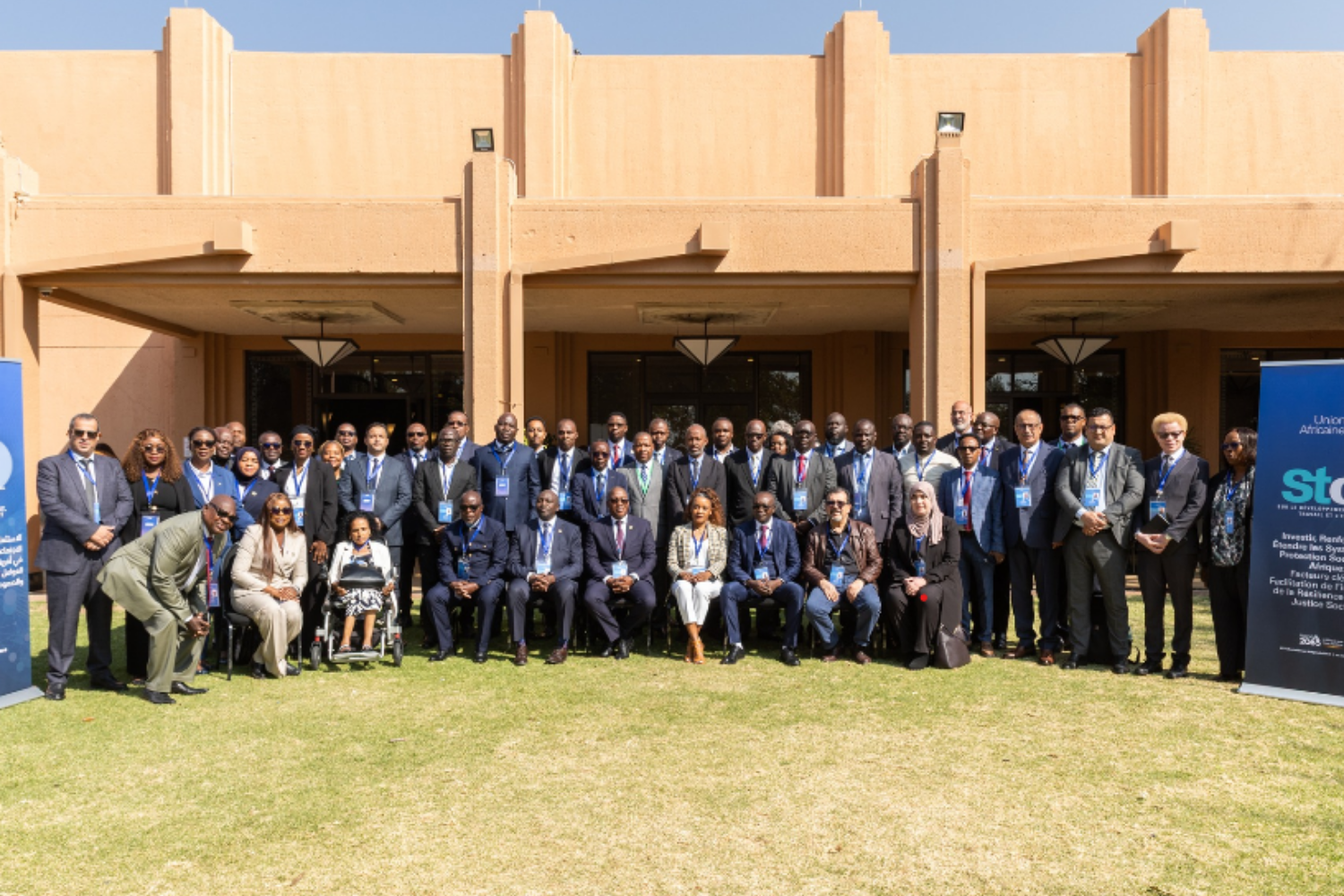
Delegates, government representatives, civil society organisations and partners participating in the Sixth Ordinary Session of the AU Specialised Technical Committee on Social Development, Labour and Employment (STC-SDLE) in Windhoek, Namibia.
A Welcome Step Forward in Windhoek
One of the most encouraging outcomes of the STC-SDLE session was the renewed attention given to the appointment of the African Union Special Envoy on Albinism.
The Ministers took note of the status of the appointment of the African Union Special Envoy on Albinism and requested the African Union Commission to expedite the implementation of Executive Council Decision EX.CL/Dec.1063(XXXV) on the appointment of the Special Envoy, without additional financial implications.
This is an important development. It demonstrates continued political attention to the matter and provides renewed momentum for advancing the Executive Council decision that has remained under consideration for several years.
For AAN and the wider albinism movement, the ministerial outcome is an encouraging indication that sustained engagement and partnership can contribute to moving continental commitments forward.
A Shared Responsibility
Protecting and promoting the rights of persons with albinism is a shared responsibility. No single institution, government or organisation can achieve this objective alone.
Progress requires cooperation among the African Union, Member States, Regional Economic Communities, national human rights institutions, organisations of persons with albinism, civil society, development partners and communities themselves.
The Africa Albinism Network remains committed to contributing to this collective effort through technical expertise, evidence generation, advocacy, capacity strengthening, resource mobilisation and support for national and continental implementation.
As I left the meeting room in Windhoek, my reflections were not only about the years that have passed since the Executive Council decision. They were also about the opportunity that lies ahead.
The appointment of the African Union Special Envoy on Albinism should not be viewed as an end in itself. Rather, it should be understood as a strategic mechanism for accelerating implementation of the AU Plan of Action on Albinism (2021-2031).
By strengthening political leadership, coordination, monitoring, advocacy, and accountability, the Envoy could help ensure that continental commitments translate into tangible improvements in the lives of persons with albinism across Africa.
The renewed ministerial commitment provides an important foundation. The task now is to convert that momentum into action.
AAN stands ready to contribute to that journey because lasting progress is built through partnership, sustained commitment and collective action.