By Delphine Malambo
My name is Delphine Malambo, a mother of three children, two of whom are girls with albinism. My journey as a parent is shaped by both deep pride and constant concern, hope and fear, all intertwined in the reality of raising children with albinism in Zambia
First and foremost, I would like to express my sincere gratitude to the Africa Albinism Network for inviting my daughter, Mwape Chimpampa, and me to attend the 47th Session of the African Committee of Experts on the Rights and Welfare of the Child, held in Maseru, Lesotho. It was a dignified and memorable experience that left a lasting impact on both of us.
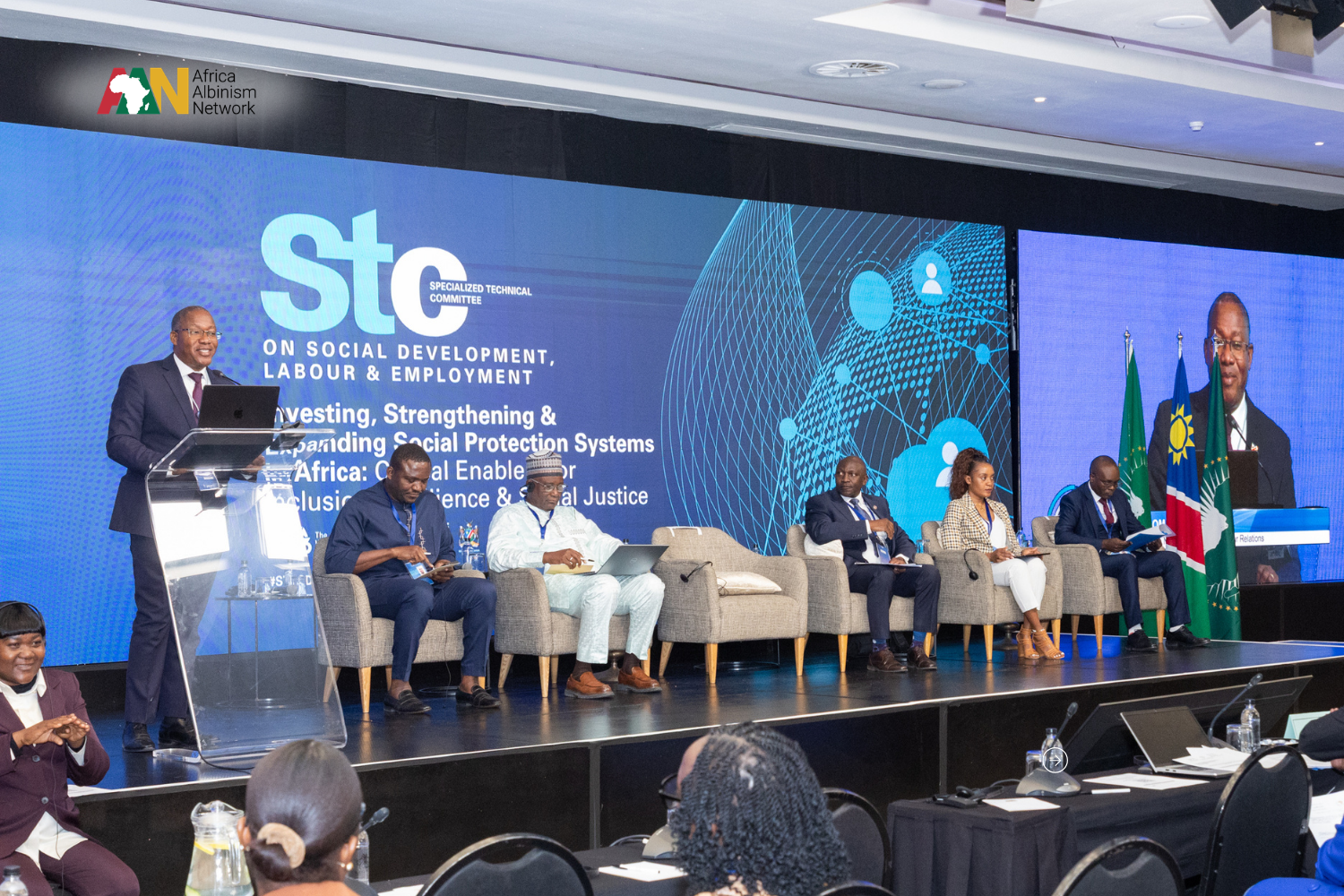
It was indeed an honour that Mwape was not only an attendee, but also had the privilege to address high-profile leaders on matters pertaining to the rights and welfare of children with albinism in Africa. One of the key messages highlighted during the session was the importance of visibility. This means ensuring that children are included in decision-making processes that affect their lives. Seeing Mwape stand and speak on behalf of so many children felt like a powerful step towards that reality.
In the moments before her speech, Mwape was nervous but very determined. She had been looking forward to that day and was deeply committed to delivering a message that would benefit all African children with albinism. As I watched her at the podium, I was filled with pride. She spoke with confidence in front of a room of influential leaders and decision-makers. Even when she mentioned her father’s passing, something that often makes her emotional, she remained composed.
After her statement, several people approached Mwape to speak with her. Although I did not ask what was discussed, it was clear that her words had resonated and sparked conversations.
Mwape Chimpampa delivering an oral statement on at the 47th ACEWRC
As a parent of children with albinism, I live in fear because of how unsafe my country is. I am deeply troubled by reports of killings, abductions, and mutilations of people with albinism. These acts are crimes. Every person with albinism, including children, has the right to life. The testimonies and reports reminded me that ignorance, harmful beliefs, and impunity still put children with albinism at risk. People with albinism are hunted because of primitive myths about their body parts. There is an urgent need for community education to end these myths, swift prosecution of perpetrators, and psychological support for survivors.
As a stakeholder, parent, and educator in Zambia, I commit to advocating for inclusive school policies that protect learners with albinism. No child should live in fear. No child should drop out of school because of discrimination, ill-treatment, lack of knowledge by teachers, or lack of supportive devices. Albinism is not a curse; it is simply the absence of melanin. Understanding this simple fact can change perceptions and, ultimately, save lives.
I felt relieved when I heard pronouncements during the session that perpetrators of killings and abductions must be prosecuted. This gave me hope, because such measures will deter offenders and create safer communities. I was also encouraged by the emphasis on involving children with albinism in decision-making and by the release of the guiding notes. These commitments lightened the heavy load I have carried in my heart about the safety of my children and others with albinism. They remind me that change is possible and that we are not alone in this fight. But hope alone is not enough. Action must follow.
Let us do better for our children with albinism.
Let us make Africa a safe haven.
Let us not stay quiet about these injustices.