In February 2026, advocates, leaders of organisations of persons with albinism, and human rights defenders from Zimbabwe, Eswatini, Tanzania, Uganda, Malawi, Cameroon and Ghana gathered in Harare for the Zimbabwe Learning Forum (ZimLF). What unfolded was more than just a training, it was a space of solidarity, strategy, and shared vision.
Organized by the Africa Albinism Network (AAN) in collaboration with its in-country partner, the National Albinism Organizations Network of Zimbabwe (NAONZ), and with support from the Disability Rights Fund (DRF), the Forum focused on strengthening the capacity of organizations of persons with albinism to engage meaningfully with African Union (AU) and United Nations (UN) human rights mechanisms, including the Universal Periodic Review (UPR).
This engagement was reinforced through joint courtesy visits held alongside the Federation of Organisation of Disabled People in Zimbabwe (FODPZ) prior to the Forum, including with the Office of the President and Cabinet (Special Advisor on Disability Issues Office), the Ministry of Public Service, Labour and Social Welfare; the Ministry of Justice, Legal and Parliamentary Affairs, and the Ministry of Youth Empowerment, Development and Vocational Training.
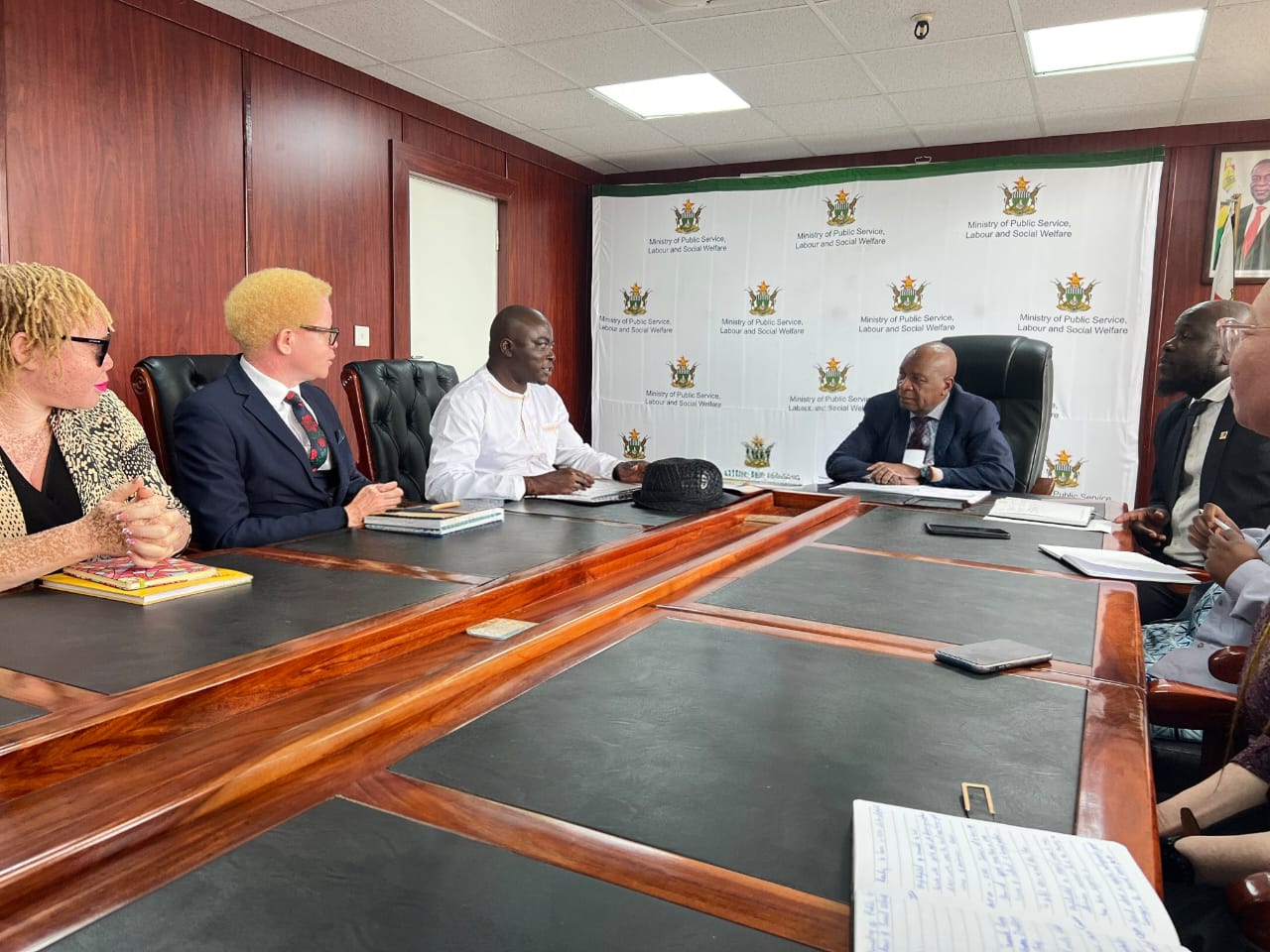
AAN, NAONZ and FODPZ meeting with the Ministry of Public Service, Labour and Social Welfare and other government officials.
It continued throughout the Forum with active participation of representatives from these institutions, alongside representatives from the Ministry of Foreign Affairs. Their contributions were highly engaging, and in their opening remarks, they expressed a strong commitment from the Government of Zimbabwe to advancing and protecting the rights of persons with albinism.
Their involvement enriched the discussions, moving them beyond technical learning and reinforcing the value of collaboration between government institutions, civil society, and albinism-led organizations around shared priorities. Media engagement during our time in Harare, including television and radio interviews, also helped extend conversations on albinism rights and advocacy to broader public audiences, ensuring that the voices of persons with albinism reached beyond the Forum itself. This wider visibility set the stage for participants to share their own reflections, strengthening their understanding of key accountability frameworks such as the African Disability Protocol (ADP), the African Commission on Human and Peoples’ Rights (ACHPR), and the UPR, and how to use them effectively to hold governments accountable.
For many, these systems had once felt distant or reserved for others. A Dr. Stukie Patricia Motsa of Eswatini reflected:
“I used to think these spaces were for a few chosen people. Today, my mind is now open. I have learned that it is for us as organisations to start the process and act, and not to wait for somebody else.”
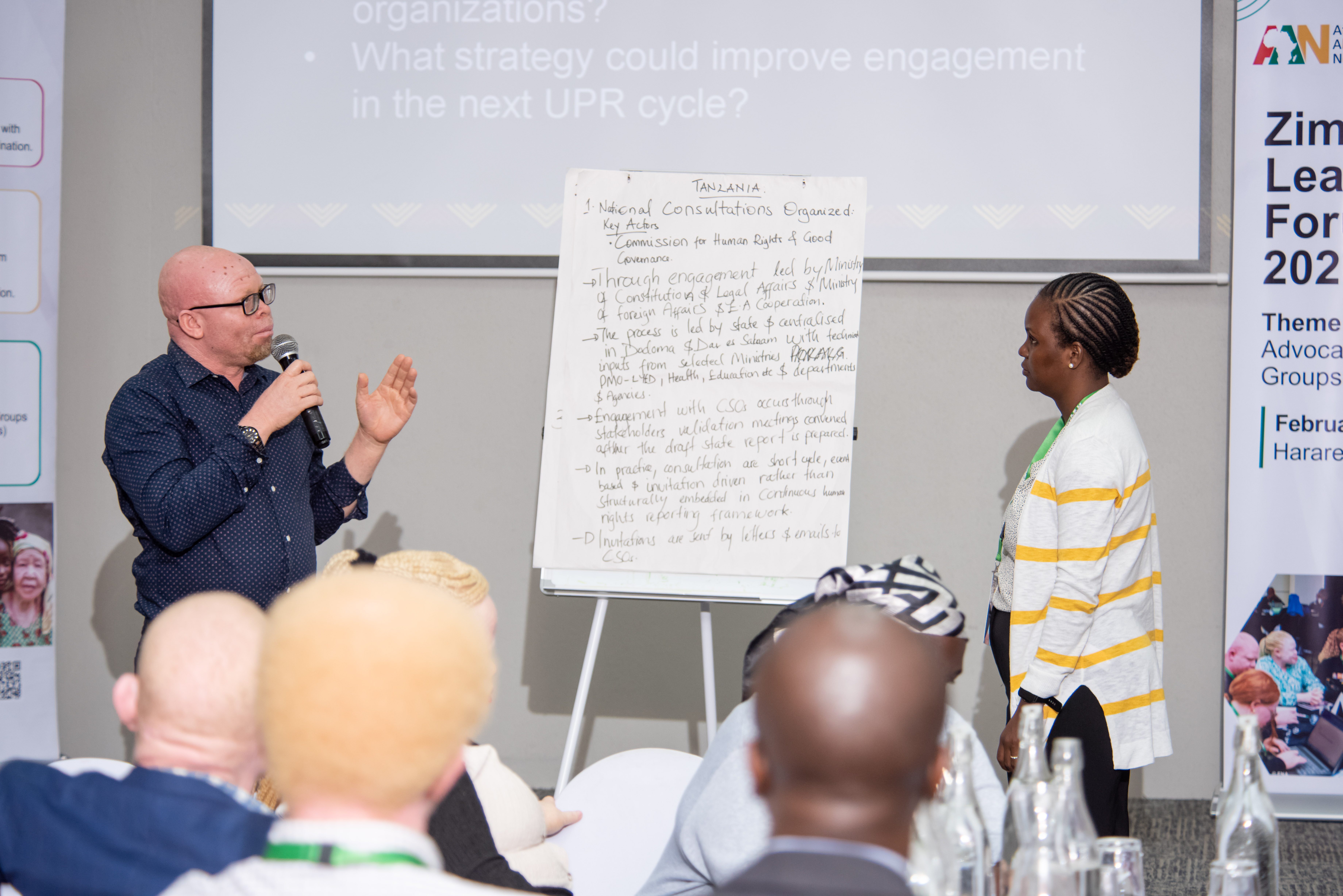
Hassan Mikazi of the Tanzania Albinism Society Morogoro (TAS) presents lessons learned from Tanzania on behalf of the participants’ team, alongside Annabahati Gwacha, who led the session on the Overview of the NAP Development Process.
This growing sense of agency shaped the Forum’s discussions. Brenda Mudzimu, Vice Chairperson of NAONZ, reminded participants:
“Nothing about us without us. We are the ones experiencing these challenges. We know what exactly we want as the albinism community.”
Watch highlights and reflections from participants and speakers at the ZimLF2026, capturing the energy, lessons, and hope that shaped the gathering.
Beyond technical learning, the Forum became a place for honest conversations about lived realities, from shortages of dermatologists and access to sunscreen, to exclusion from education and healthcare services. These exchanges grounded the policy discussions in everyday experiences, reinforcing why advocacy must be led by persons with albinism themselves.
AAN Executive Director, Bonface Massah, emphasised that National Action Plans for persons with albinism (NAPs) are not acts of charity, but matters of rights and justice:
“When we talk about a National Action Plan for persons with albinism, we are talking about investing in the rights of people in our society.”
Participants examined lessons from countries such as Angola, Malawi, Tanzania, Uganda, and Zambia, drawing insights from their experiences in developing and implementing NAPs. At the same time, they called on Zimbabwe to develop and adopt its own NAP aligned with the Africa Union Plan of Action on albinism (2021–2031).
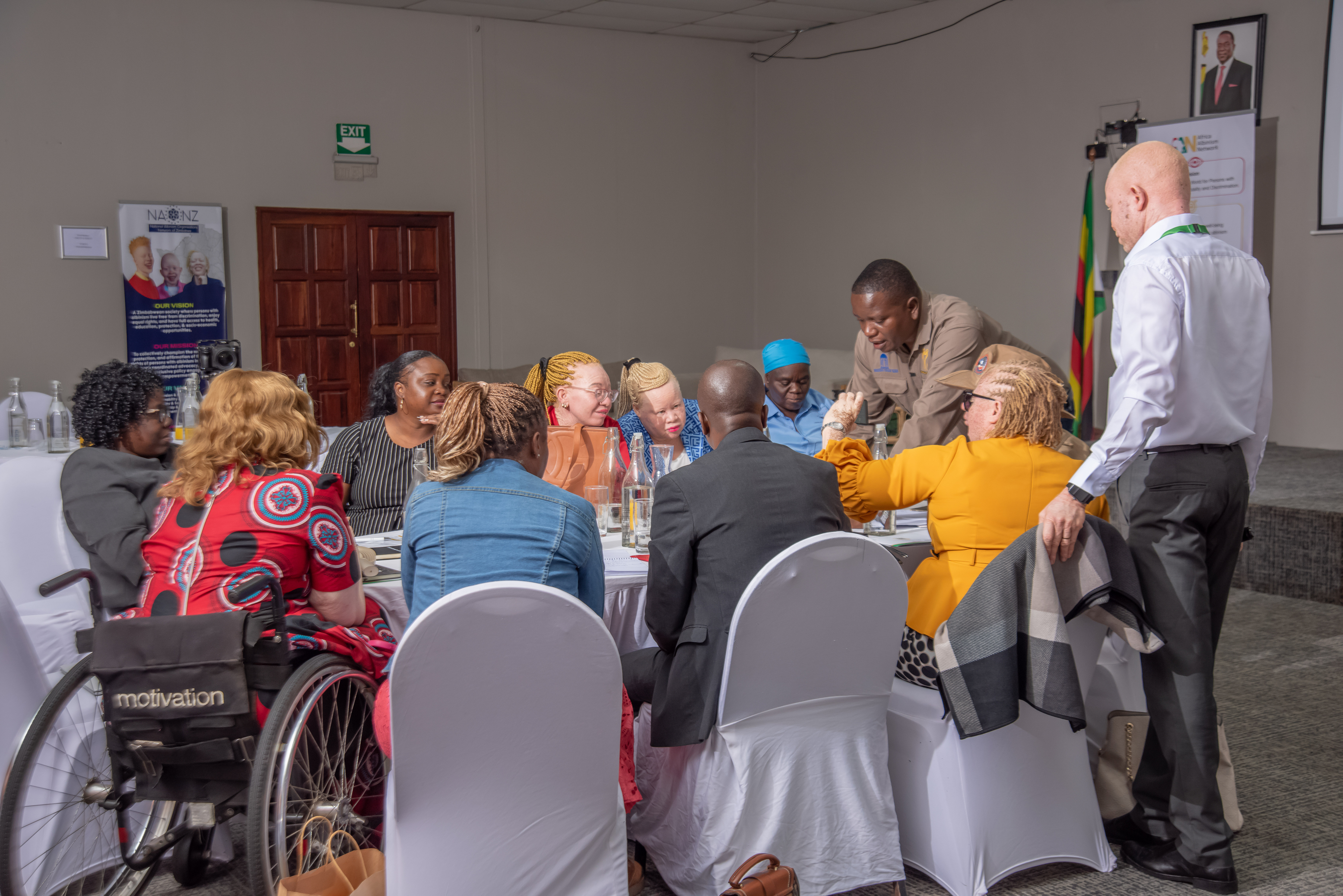
Participants from Zimbabwe participating in a group discussion during one of the sessions at the Zimbabwe Learning Forum (ZimLF)
By the end of the Forum, participants had not only identified and draft advocacy priorities, but also strengthened their skills in shadow reporting, stakeholder engagement, and regional collaboration, tools essential for sustained advocacy and accountability.
The atmosphere remained hopeful throughout. Beyond the formal sessions, participants exchanged personal experiences and built meaningful cross-border connections. Dr. Stukie Motsa emphasised on the power of unity, underscoring the collective strength of the movement:
“Organisations that deal with albinism issues need to be united. They need to speak in one voice… if we are fragmented, then we will not win the war we are fighting for.”
The conversations sparked during the ZimLF did not end when participants left the meeting rooms. Following the Forum, AAN held further discussions with CBM Zimbabwe and NAONZ to reflect on key themes that emerged and explore pathways for advancing National Action Plan (NAP) processes and broader collaboration. While exploratory, these discussions strengthened partnerships and opened new opportunities for continued advocacy and coordination for advancing the rights and inclusion of persons with albinism in Zimbabwe.
By the close of the Forum, participants carried home more than strategies. They carried renewed confidence, stronger relationships, and a shared commitment to speak for themselves and shape the future of the movement together.
As, our Executive Director-Bonface Massah reflected:
“With strong leadership at organisation level of people with albinism, we should be able to meaningfully engage our government, demand, and claim our rights.”
And as participants departed Harare, one Shona phrase echoed, a simple but powerful reminder of collective responsibility:
“Iwe neni tine basa.”
You and I have work to do.
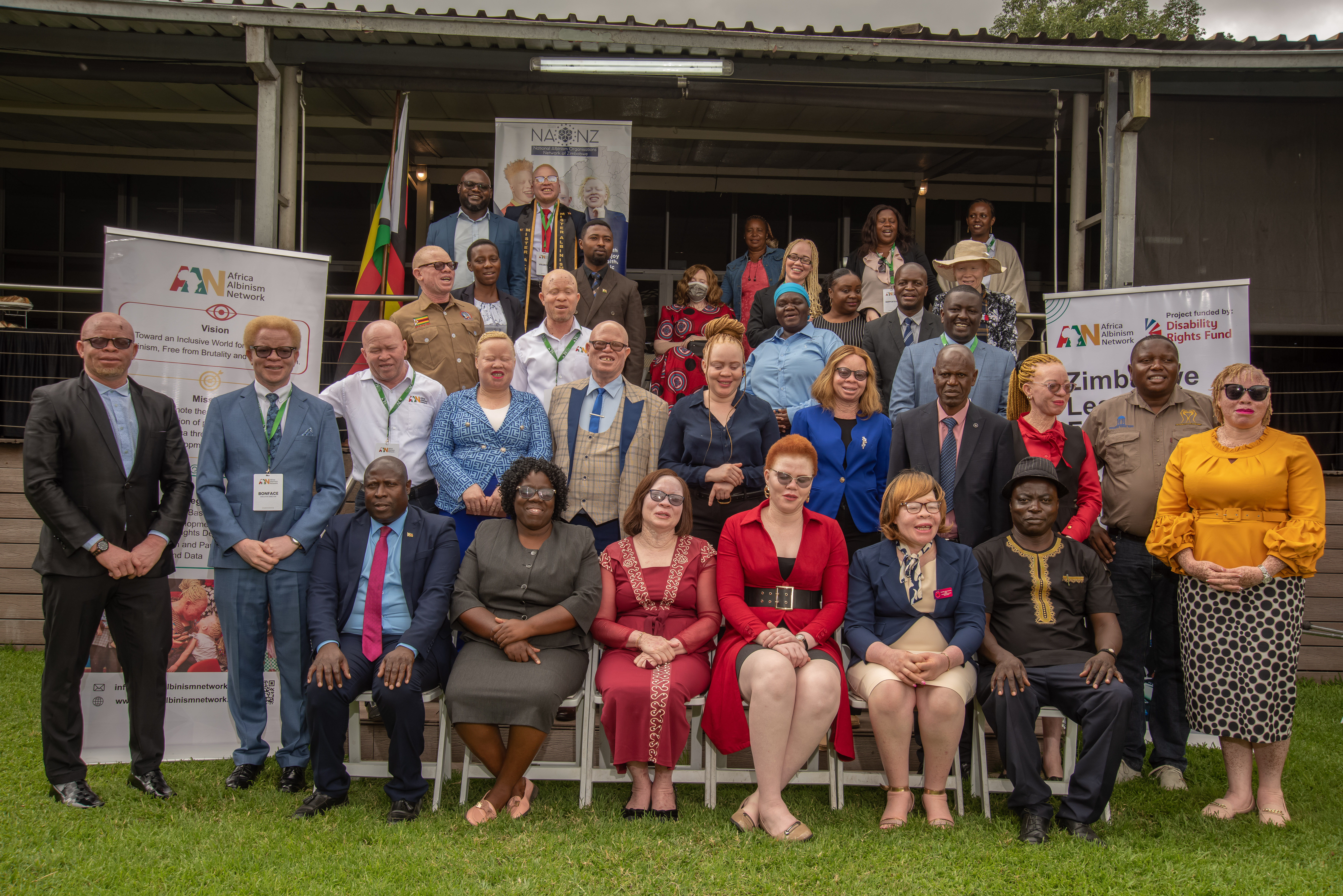
Group photo of all participants, stakeholders, and government officials present at the ZimLF on Day 1