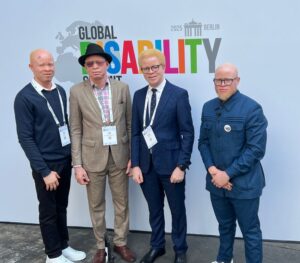
From 1st to 3rd April 2025, we had the honor of joining hundreds of changemakers at the Global Disability Summit (GDS) in Berlin, Germany. This global platform was not just another event for advocates like us who work to promote the rights of persons with albinism, particularly in Africa; it was a moment of solidarity, learning, and renewed commitment.
Watch highlights in the video below!
What is the GDS and why it matters
The Global Disability Summit (GDS) is a high-level international gathering that brings together governments, civil society organizations, donors, private sector actors, and persons with disabilities to accelerate progress on the rights and inclusion of persons with disabilities. Grounded in the principles of the UN Convention on the Rights of Persons with Disabilities (CRPD), the Summit provides a vital platform for making ambitious commitments, sharing innovative practices, and amplifying the voices of persons with disabilities from around the world.
The GDS shifts the global focus toward disability-inclusive development and holds stakeholders accountable for meaningful change. For advocates and communities often left behind, like us, persons with albinism, it offers a rare and powerful opportunity to influence global agendas, build networks, and ensure that no one is left behind.
Why we attended
Our motivation for attending the Global Disability Summit was driven by a desire to learn, connect, and advocate. We saw the summit as an important opportunity to deepen our engagement with the global disability community, strengthen relationships with our current funders, and explore potential collaborations with new partners.
Heading into the GDS, our expectations were modest, particularly when it came to the visibility of persons with albinism. We did not anticipate seeing many individuals with albinism meaningfully involved.
To our surprise and delight, not only were persons with albinism present, but they were actively participating, serving as panelists, speakers, and even moderating full sessions from the opening day to the closing plenary. It was both empowering and affirming.
Our core mission at the summit was to raise awareness of the human rights challenges faced by persons with albinism. We aimed to bring these issues into the broader disability discourse through our participation in side events and main sessions, as well as fireside chats. Additionally, we sought to showcase the impact of our work, particularly to our existing funders, while demonstrating the value of investing in albinism-focused advocacy to potential new funders and partners.
Key Highlights and Experiences
The Global Disability Summit (GDS) was a vibrant and multifaceted event, with numerous sessions running simultaneously, ranging from main plenaries to side events and fireside chats. This rich and diverse program could have easily become overwhelming, but thanks to careful planning, we were well-prepared. Before the summit, we identified key sessions aligned with our interests and strategic goals. This preparation was instrumental in maximizing our participation and ensuring we remained focused, organized, and intentional throughout the summit.
Given that one of our primary goals was to engage with funders, potential partners, and allies, we prioritized events organized by donor agencies and organizations we hoped to collaborate with. These sessions provided insight into their current work and strategic priorities, allowing us to explore alignment and identify opportunities for future partnerships.
One of the most powerful and affirming moments of the GDS came during the opening session, where one of the moderators boldly announced that she has ocular albinism. Beyond her words, her choice of bright, high-contrast clothing subtly but significantly highlighted the importance of visual accessibility, an often-overlooked issue for persons with albinism.
This moment was not only symbolic but deeply validating, especially for those of us who rarely see albinism represented meaningfully on such global stages.
Throughout the summit, several individuals with albinism, particularly from Africa, played leading roles as speakers and panelists. They contributed to discussions on employment, political participation, gender equality, and youth empowerment, among others. Seeing persons with albinism, especially young advocates, speak with such clarity and confidence in these spaces was both moving and inspiring.
Another standout moment was the presentation of new commitments by development partners, funders, and governments. Of particular interest to us was the announcement by CBM Global Disability Inclusion.
CBM Global made a commitment to increase by 25% the number of projects with organizational strengthening components for Organizations of Persons with Disabilities (OPDs) by 2027.
This commitment reflects a shift in focus, moving from traditional models of risk management to empowering OPDs through capacity-building initiatives tailored to their priorities, as demonstrated by their Growing Stronger Together program with the Pacific Disability Forum.
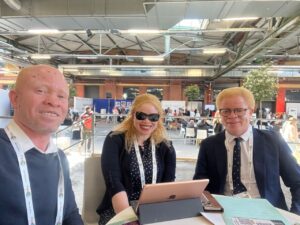
As the only Africa-based organization dedicated specifically to promoting the rights of persons with albinism both on the continent and globally, AAN has embraced our unique role at the GDS. Inspired by the number of persons with albinism in attendance, we took the initiative to bring them together for a special “meet and greet” session. Our ability to mobilize quickly brought together participants with albinism from across Africa—and even from as far as Nepal and Italy. This gathering fostered a sense of belonging, solidarity, and community, where participants shared experiences, built networks, and exchanged best practices.
Challenges and Reflections
While the Global Disability Summit was an inspiring and impactful event, it is important to reflect on some of the challenges that participants, especially those with disabilities, faced. These experiences offer critical lessons for future summits, particularly for an event that seeks to model accessibility and inclusion.
Upon arrival in Berlin, we expected to receive the guided support promised in the GDS Participant Guide. Unfortunately, we encountered no visible volunteers at the airport to assist. It’s possible that volunteers were present but not easily identifiable, particularly for those of us with low vision. This initial lack of orientation was disorienting and marked a missed opportunity for inclusive hospitality.
The first day of the summit also posed a serious challenge. Due to the high-level attendance of the King of Jordan and the German Federal Chancellor, security at the venue was understandably tight. However, the security checkpoint setup was not designed with accessibility in mind. With only two tables for checks, long queues quickly formed. Many persons with disabilities, including wheelchair users and those with low mobility, were left standing outside in early morning temperatures below 10°C. This was uncomfortable and potentially hazardous, especially for those with health conditions aggravated by cold exposure. We had to seek temporary refuge in a nearby coffee shop to avoid the harsh weather. Future events must consider weather accommodations and accessibility in security arrangements to protect the well-being of all participants.
Inside the venue, while the summit offered many rich sessions, most were structured around lengthy speeches and panel discussions, with limited opportunity for audience engagement. Fireside chats, meant to be more interactive, were held in open areas with few microphones available. The ambient noise made it nearly impossible to participate meaningfully without amplification. While large screens with live captioning and sign language interpretation were provided, they were not always adequately sized or positioned for persons with low vision. As a result, access to full participation remained limited in several instances.
These reflections are not meant to diminish the overall significance of the GDS but rather to spotlight areas where meaningful inclusion can be improved.
For a summit centered on disability rights, accessibility cannot be an afterthought; it must be embedded in every aspect, from visa processes to venue design and session formats.
Lessons Learned & Takeaways
Our experience at the Global Disability Summit offered many lessons, both strategic and personal, that are worth sharing with others planning to participate in similar global events.
- Advance Preparation Enhances Participation
Meaningful engagement at large events like the GDS, where multiple sessions happen simultaneously, requires deliberate planning. Before arriving in Berlin, we carefully reviewed the agenda and identified the sessions most relevant to our mission. We also scheduled buffer times between sessions for networking, debriefs, and spontaneous meetings. This advanced preparation helped us stay focused and prevented us from becoming overwhelmed. It also gave us the flexibility to respond to last-minute changes, such as impromptu meetings and unexpected but important networking opportunities. - Be Agile, Open-Minded, and Responsive to Change
We arrived at the GDS with modest expectations regarding the representation of persons with albinism. To our surprise, their presence and visibility, especially in leadership roles, exceeded our expectations. This unexpected development prompted us to act swiftly, mobilizing and creating a networking platform for persons with albinism attending the summit. Remaining open to change and ready to respond allowed us to turn a moment of surprise into a meaningful and empowering experience. - Network with Intention and Purpose
At such a high-level event, networking is more than just exchanging contacts. We were intentional about identifying organizations and individuals whose work aligned with ours. We aimed to strengthen existing partnerships while building new relationships that could lead to collaboration or support. This strategic approach made our interactions more focused and productive. - Visibility and Strategic Positioning Matter
We learned the value of physically positioning ourselves in a central, visible area of the summit venue. This not only made it easier for people to find us for scheduled meetings but also increased our spontaneous interactions with potential partners and allies. In many instances, people approached us simply because they saw us consistently in a familiar, accessible spot. This subtle yet effective tactic enhanced our presence and visibility throughout the summit.
Attending the Global Disability Summit in Berlin was a transformative experience, not just for the exposure it provided to global disability rights discourse but also for the practical lessons, powerful connections, and renewed sense of purpose it inspired.
From the careful preparation that allowed us to navigate the intense schedule of the Summit, to the meaningful networking that sparked new ideas and collaborations, every moment contributed to a greater goal: building a more inclusive world. The unexpected but welcome visibility of persons with albinism reminded us of the power of representation, and our ability to act quickly and bring people together showed the value of leadership rooted in community.
Yet, our journey also highlighted areas that must be improved, starting with more accessible visa processes, disability-friendly logistics, and inclusive engagement mechanisms at such international gatherings. These are not just technical issues, they are human rights concerns that must be addressed if we are to live up to the principles of “nothing about us. without us.”
As we move forward, we carry with us the connections made, the lessons learned, and the vision renewed. We remain committed to ensuring that persons with albinism, across Africa and beyond, are not only included but are leading in the disability rights movement. The GDS was a moment, but our mission is a movement.