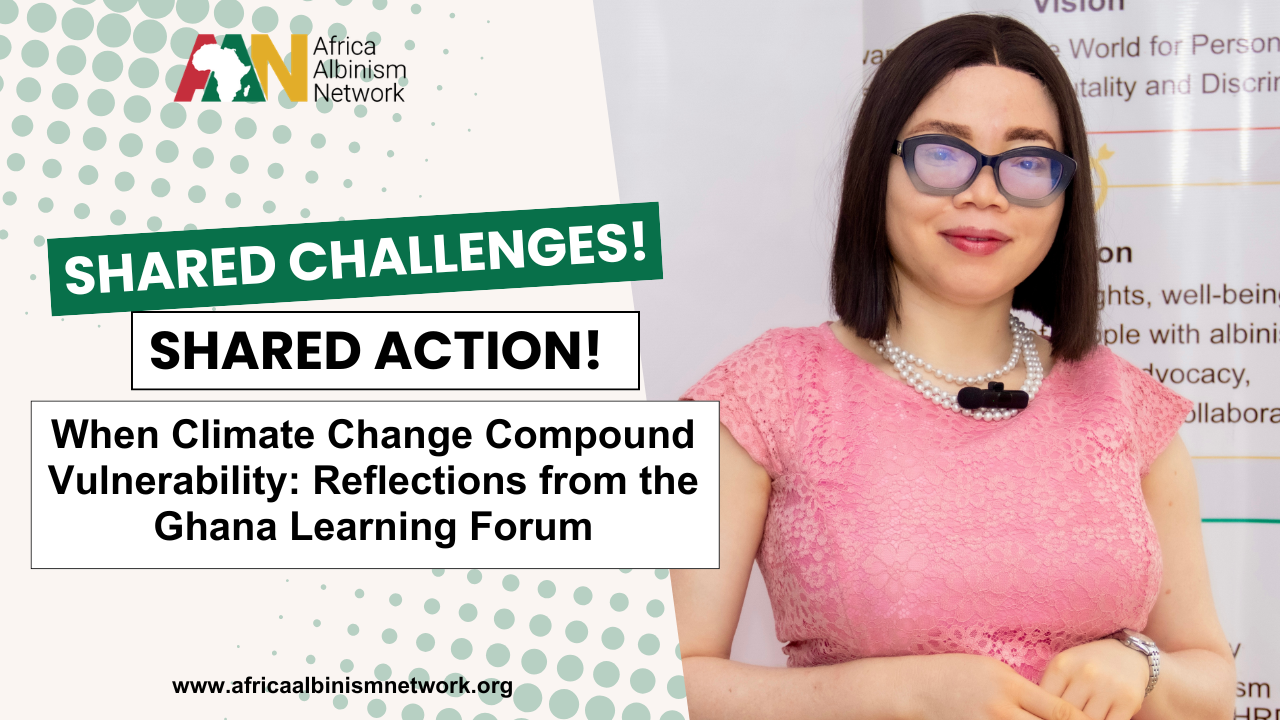
On 23–24 September 2025, the Africa Albinism Network (AAN), with support from the Disability Rights Fund (DRF), convened the first-ever Anglophone West-Africa Regional Learning Forum in Accra, Ghana, under the theme “Climate Change, Human Rights, and Albinism.” This instrumental gathering brought together advocates, human rights defenders, disability leaders, and partner organisations from Ghana, Nigeria, Sierra Leone, Liberia, and The Gambia.
Climate change is reshaping life across West Africa, and for persons with albinism, already facing heightened risks from extreme sun exposure, low vision, social discrimination, and systemic exclusion; the impacts are particularly severe. Yet their realities remain largely absent from climate justice and disability rights dialogues, both national and regional. The Ghana Learning Forum directly responded to this critical gap by placing the experiences, needs, and rights of persons with albinism at the centre of climate discourse.
Opening Reflections and High-Level Statements
In his welcome address, Mr. Newton K. Katseku, Executive Director of the Ghana Association of Persons with Albinism (GAPA), reaffirmed the community’s leadership and commitment to climate justice. “We champion the course for an equitable environment,” he stated, underscoring the importance of collaboration and sustained advocacy.
AAN’s Executive Director, Mr. Bonface Massah, delivered a powerful keynote address highlighting the urgency of the issue:
“This is a special moment; a platform where we want to present the intersectional relationship between climate change, persons with albinism, and also human rights.”
He spoke candidly of the African UV index, often above 10 and how persons with albinism can burn within minutes. Climate change, he noted, has transformed daily life into a series of life-threatening exposures. He urged participants not only to learn, but to take action.
“If we stop defending our human rights, that’s the day we also stop enjoying those rights.”
Similarly, Mr. Theophilus Odaudu of Disability Rights Fund (DRF) emphasised the power of collective action:
“When persons with disabilities are able to come together, are able to learn together to share experiences, then we are able to co-create the solutions that are needed.”
Lived Experiences and Critical Discussions
A major highlight of the forum was a moving panel session where participants shared personal experiences of climate stress. Their stories painted a vivid picture of the escalating challenges faced across the region.
The Executive Director of Albinism Royal Foundation (ARF), Ms. Sarah Ngaiwa from Sierra Leone described how floods swept away schools, leaving children with albinism excluded from learning for long stretches. Ms. Nnene Bassey, from Nigeria, shared the harrowing account of a 17-year-old boy with albinism who was abandoned while suffering from advanced skin cancer, left untreated, unsupported, and forced to fend for himself. Others explained the realities of walking long distances to school under blistering heat, suffering severe sun burns, and being turned away from workplaces because climate-induced skin damage fuels discrimination.
In one of the panel, Nnene Bassey, Executive Director of Advocacy for Persons with Albinism Network (APAN) offered a stark warning:
“When it comes to skin cancer, don’t experience it before you learn because you may not live to tell the story.”
Beyond health impacts, participants examined how climate pressures are intensifying harmful cultural practices, disrupting education, and worsening employment discrimination for persons with albinism.
Climate Change Is Deepening Inequalities and the Forum Made That Clear
Across presentations and discussions, participants highlighted the worsening threats to the rights and well-being of persons with albinism:
- Rising skin cancer cases, often fatal due to limited access to screening and treatment.
- Increasing school dropout caused by heightened sun intensity, vision difficulties, stigma, and damaged infrastructure.
- Unsafe working conditions, especially for those engaged in outdoor labour.
- Exclusion from climate policy and emergency planning, despite being among the most affected.
- Heightened risks of harmful practices including ritual attacks linked to climate stress and drought.
One example from Ghana illustrated this danger: a young man with albinism was targeted for ritual sacrifice based on the belief that his death would “bring rains.” In Sierra Leone, another participant described a case where a person with albinism was denied medical treatment for skin cancer, a clear violation of the right to health and life. These stories were not exceptions; they were echoed in every country represented.
Advocacy Planning and Policy Commitments
Participants engaged in intensive group sessions to map climate impacts on specific rights including rights to life, health, education, and work, while identifying gaps in national climate and Disaster Risk Reduction (DRR) frameworks. These discussions produced strong, actionable commitments, including:
- Ghana: Advance advocacy for sunscreen inclusion under the National Health Insurance Scheme (NHIS) and ensure explicit integration of albinism in national climate policies by 2026.
- Nigeria: Engage the Committee on Disabilities to revise the National Climate Change Policy and advocate for the establishment of a Ministry for Climate Change by 2027.
- Sierra Leone: Collaborate with national institutions to review the Climate Change Policy to include persons with albinism by 2030.
- The Gambia & Liberia: Strengthen the participation of persons with disabilities, including persons with albinism, in climate and DRR decision-making processes.
Participants also received an orientation on the African Union Plan of Action on Albinism (2021–2031), reinforcing the need for National Albinism Action Plans across the region.
Strengthening a Regional Movement
In closing remarks, both Mr. Massah and Mr. Katseku reaffirmed the importance of regional unity and sustained action. Mr. Katseku noted that the conversations “reflect an urgent need to build a just and inclusive world.”
Mr. Massah echoed the sentiment, calling for continuous mutual support:
“We should continuously support one another in this process of defending human rights.”
Conclusion
The Ghana Learning Forum marked a foundational moment in positioning persons with albinism within climate justice frameworks in West Africa. It built advocacy capacity, strengthened regional collaboration, and catalysed commitments toward inclusive policy reform.
AAN extends heartfelt appreciation to all participants, partners, and supporters who contributed to the success of this historic gathering. Together, we continue the work of ensuring that persons with albinism in Africa are not left behind in the climate justice movement.